MuseSketch
Designed a mobile composition system so musical ideas could move from intuition to notation without friction.
Traditional music notation software assumes users think in notation first. But most musicians don’t. MuseSketch started from a different premise: musical ideas often begin as gesture, contour, and motion, not symbols. Existing tools forced composers to translate inspiration into formal structure too early, disrupting creative flow. The problem wasn’t musical literacy. It was interface mismatch.
The goal was to allow musical thought to stay musical for as long as possible.
- Capture melodic intent through gesture
- Delay formal notation until it added value
- Make composition feel physical, not clerical
Constraints
- Small screens
- Real-time audio feedback
- Effective media infrastructure
- Compatibility with traditional notation systems
Structure
MuseSketch was designed as a staged system:
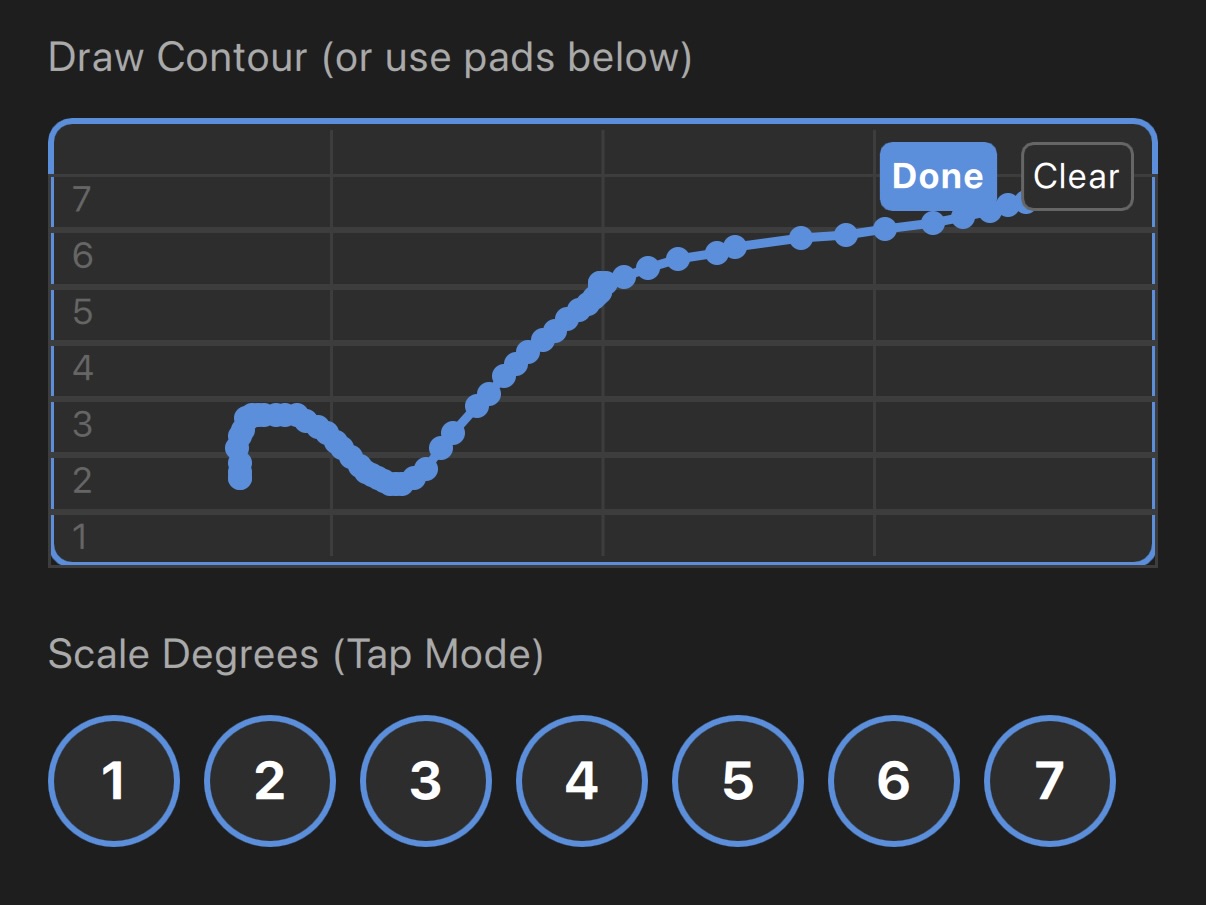
- A gestural canvas for melodic contour
- A quantization layer that translated intent into structure
- A notation engine that formalized the result only when needed
Each layer respected the one before it, rather than overwriting it.
Key Decisions
- Used continuous gestures instead of discrete note entry
- Designed quantization as interpretation, not correction
- Prioritized sound feedback over visual confirmation
- Treated notation as an output, not the primary interface
The system preserves ambiguity early and introduces precision later, a key principle of our system-first approach.
MuseSketch reframed composition as a fluid process. Musical ideas could be captured quickly and naturally, and the transition from intuition to notation felt intentional. Users spent more time composing and less time editing. The interface made structure feel like an ally, not an interruption.
 Notation Engine Output
Good creative tools don’t replace intuition — they protect it until structure is ready.